We are free to educate our children as we choose in nearly all U.S. states. (That is not necessarily the case in all countries.) Yet, this topic is becoming a raging debate with some becoming more supportive of educational freedom, and others favoring increasing government regulation and intrusion, even on homeschoolers. In this post, we argue for a why education must remain free and, in fact, become even freer. I will explain. Most of you reading this are probably homeschoolers, so we’ll start there. The freedom to homeschool is one thing; the access to the abundance to support it, is another. The same goes for private schooling, like Waldorf and others. Where funding is not equitable, however, how can we speak of real freedom?
While we appreciate how most states leave us alone to educate our children as we choose, not all states support us equitably in doing so. On the one side are voucher programs, Empowerment Scholarship Accounts (ESAs), Education Freedom Accounts (EFAs), and the newly created national Education Freedom Tax Credit (EFTC) Scholarship program (starting January 1, 2027). These programs give parents more choice, making homeschooling and private schooling viable options not just for wealthy families but all families. Enkindle Academy currently accepts funds from many of these programs (info here), and is being vetted as a vendor for the federal EFTC program (more info coming on that, soon).
On the other side are staunch opponents of education freedom, like certain recently elected U.S. senators who argue against such funding changes for reasons such as:
- There is a lack of accountability for private schools (and homeschools)
- These programs benefit primarily the wealthy who already send their children to private schools
- Public schools are underfunded.
We will speak to each of these criticisms and understand why education must remain free.
Accountability…for What? And, Whose Job Is Accountability, Anyway?
The first problem with the accountability question is, who is deciding the standards to measure them by? The answer is governments. Yet, governments are not the experts on education and what children need. Teachers and parents are, for they are the ones who work directly with the children. So, when elected officials criticize non-public education for its lack of accountability, we have to ask, “Accountability for what?” Raising creative, capable, and compassionate human beings who know themselves and grow up to impart meaning and direction to their own lives? Or is it to meet a bureaucratically-determined, often market-driven, necessarily materialistic, usually values-less, misguided set of standards? In a proper Threefold Social Order, the government has no role in determining education standards nor curricula. They have a different function, which we will cover soon.
The second criticism about benefitting the rich is a mixed bag. Some ESA/EFA programs have income restrictions and some do not. The new federal EFTC program limits participation to incomes within 300% of the area median gross income (AMGI). This point is worth addressing in greater detail in a minute.
How Politicians Twist the Facts
The third criticism that public schools are underfunded is not untrue, but it’s a clever diversion with a monkey wrench that illuminates its manipulative intention. Guess what? The biggest part of school budgets is teacher pay (National Center for Education Statistics, 2024). Does it then surprise you to know American public school teachers are 33% better paid than private school teachers, what to speak of homeschoolers (National Center for Education Statistics [NCES], 2022)?
It’s always interesting to see neatly groomed, former public school teachers-turned politicians speak like snakes in the grass to push unspoken agendas or, at best, spread misguided understandings of the real problems and remedies in education. Frankly, hearing such things makes me feel a little ill, for when the facts expose their duplicitous half-truths, their slick arguments lose their luster.
Don’t drink the Kool-Aid. Education in the States is underfunded, full stop, and if public schools are inadequately funded, how much worse off are independent schools? As a side note, if society understood how education affects children for life, teachers would be paid like doctors, like they are in Finland. Alas, we have what we have, and flapping politicians should keep their tongues between their teeth.
So, Who Should Benefit From Changing the Funding Streams?
It’s fair to criticize the ESA/EFA programs that have no income limits. The point here is not to benefit the wealthy – it’s to ensure every family has equal access to the education they freely choose for their child. Herein, we find the government’s true role in education. It’s not to establish or uphold standards, nor to hold schools accountable (other than they obey the laws everyone has to abide by). Public funding for school choice should become a daily reality for all Americans, and it should come with no strings attached other than that it goes towards the in-school or homeschool education of parents’ choosing. Full Stop.
Accountability is teachers’ and parents’ jobs. The government’s role is to ensure everyone’s right to freely educate their child and material access to that choice. In other words, that they can pay for it. More on this below.
As an aside, I don’t personally believe any education should be totally without cost because parents wouldn’t value it as much. They should have to pay something. However, it should be a small something, kind of like a co-pay when you go to the doctor. Not enough to hurt, but enough to make sure you’re making a conscious choice. (The only exception for that would be people in poverty, for example, those on food stamps or Medicaid.)
Why Education Must Remain Free
Why education must remain free and become freely funded starts with an understanding of the threefold nature of a healthy human society. The head is the cultural realm. It’s where education, research, the arts, religion, journalism, medicine, etc. live. In other words, all those activities in which humans think, speak/express, discover truth, and come up with novel innovations, ideas, and moral guidance. Such a realm must be free, otherwise, our moral and scientific grounding in reality will be compromised. (That’s what happens when authorities censor the free pursuit of truth). Culture provides leadership to the political and economic realms because culture tells us what we value. It’s why Martin Luther King, Jr., was a pastor before he was an activist. His moral compass and strength came from his spiritual views, not his knowledge of the law. You can see now why government has no role in policing what teachers and parents teach children. Government’s job is not to tell us what matters but to support us in deciding for ourselves in community with others.
Every child should have the opportunity to develop their full human potential. Governments don’t know individual children. Teachers and parents do and can thus determine, “This child needs more art, that child more math, this third child more movement,” and so on. Holding every child to a monolithic standard deadens this individualized process. Families need the funds to give their children the opportunities they see are best for them. That certainly includes homeschooling.
I’m not saying benchmarks and recommendations have no place in guiding what teachers teach, but they, themselves, should be the ones creating them and measuring their students’ progress. Not a U.S. senator. Here is where elected officials need to understand their role in the social order. That is, if we are to have the functional society they purport to strive for. They must understand why education must remain free and ensure we all get to exercise that freedom.
The Economic Question
It is possible to design ESA/EFA/EFTC and voucher programs to benefit those who need it. That’s part of creating real equity in society, and I support it. Income limits for eligibility or even a tiered system based on income makes sense to me. I will leave that to economics experts to figure out, as long as our goal is to give everyone from top to bottom an equal choice to educate their children as they see fit. Most families in America do not yet have that. Meanwhile, if you can afford a Ferrari, you don’t need it.
One of the other criticisms of these programs is they often don’t even cover a full private school tuition. Once again, this reasoning is another distraction. On average, 25% of private school families receive financial aid (National Association of Independent Schools [NAIS], n.d.). At the Waldorf Schools I’ve been associated with, that number is significantly higher. Private schools set their tuition high knowing they’re not, in many cases, going to get it. As a Board member, I’ve been intimately involved in these conversations, so I can assure you that’s true. Fancy prep schools in Connecticut are one thing; humble Waldorf schools or homeschool curriculum programs are quite another. Many independent schools and curriculum creators would be thrilled to have a public program ensuring even half or three quarters tuition for each child. So, one of the requirements for schools and homeschools to accept public money could be that a voucher counts for a full tuition. There are creative ways to meet the needs all around without leaving anyone in the lurch.
So, Where Do We Go From Here?
Opponents create much noise in opposition to why education must remain free. These naysayers generally do not want to improve the quality of school choice programs. They want to get rid of them entirely. These folks don’t want you having a choice, believing with great hubris that our public education system is the best thing since sliced bread. Their teacher unions, who put their own needs before what’s best for children and families, are their mercenaries. Meanwhile, more children and youth suffer from a meaning and mental health crisis such as the world has never seen. I’ve written extensively about this here and here.
The greatest reason public education is degrading itself and our nation’s youth is because it has no values. That problem cannot be solved by more governmentally-enforced accountability in order to get paid, but by less. Let the cultural realm be free, and the people will eventually discover what matters when paths like Waldorf and Neohumanism demonstrate their abilities to win young hearts and minds. Such approaches form the basis of what we deliver at Enkindle Academy. We teach youth to see themselves embedded in a geometric, unbroken web of relationships with all that is, revealing those hidden connections through math, science, history, geography, the arts, and so on. What we offer here is the healing of the meaning crisis. You can signup for a free sample lesson to see how we work.
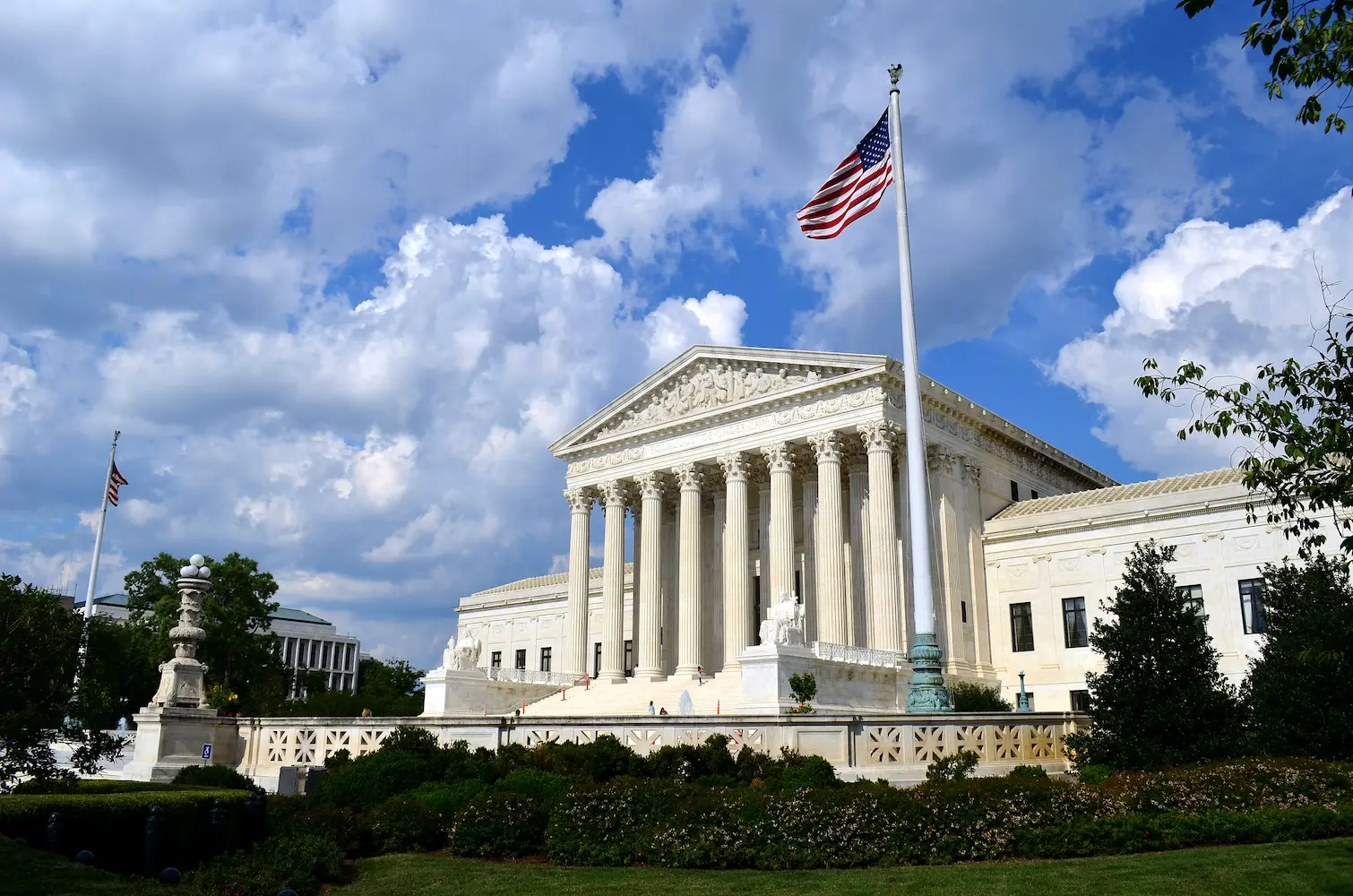
Opponents of education freedom strive ardently to hold back the inevitable progress of human society. Yet, education is already becoming freer. Just see the Supreme Court’s recent decision in Mahmoud v. Taylor. So, what you can do is write your state and federal representatives and senators to tell them how you feel. The bigger we build the tidal wave for why education must remain free and become freely funded, the more its opponents won’t be able to hold it back. They will become swept away by a society of thriving children.
How to Connect
Enkindle Academy inspires young minds using a regenerative, Steiner-based approach to homeschooling. We offer prerecorded and live lessons for students in grades 5-9, encouraging students to deepen their reverence for nature and the living reality that permeates it. We teach all academic subjects plus creative writing and language arts, empowerment groups for teens, and soon to add fine arts.
Signup for a free sample lesson now.
References
- National Center for Education Statistics. (2024). Public school expenditures. U.S. Department of Education, Institute of Education Sciences.
- National Center for Education Statistics. (2022). Characteristics of 2020–21 public and private K–12 school teachers in the United States: Results from the National Teacher and Principal Survey. U.S. Department of Education. https://nces.ed.gov/pubs2022/2022113.pdf
- National Association of Independent Schools. (n.d.). Learn about independent schools. https://www.nais.org/about/parents/learn-about-independent-schools
Leave a Reply
You must be logged in to post a comment.