
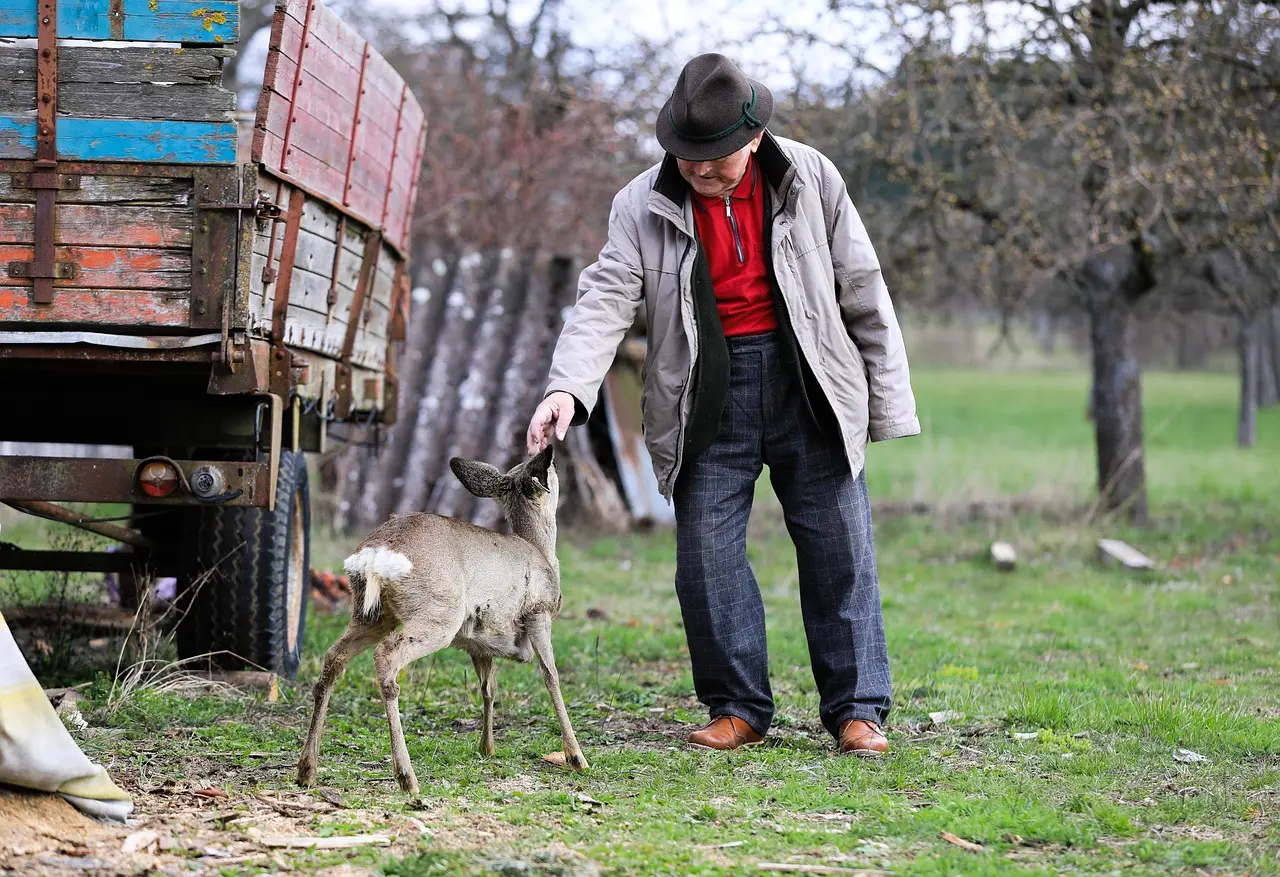
Human stewardship means the human being is a/the steward of nature. This is most often found in theological ideas who believe God has entrusted and endowed us with the capacity to steward nature effectively. Growing numbers of adults and students resist this idea. In fact, some look at humans as a virus that, perhaps, the world would be better off without. It’s surprising to see how many youth hold this nihilistic belief. On the other hand, it’s easy to understand why they do, given how much environmental and social destruction human beings have caused.
(Before we proceed, I must say that I will use some Biblical references throughout this post. Yet, my intention is not to promote a religion. I just think the images are useful to help us understand the matter.)
Consider How We Meet Our Needs
Human society started hunting and gathering, but we are now dependent on agriculture, shelter, fuel, etc. Some folks still live off grid, completely self-sustainably, and that’s admirable. Yet, some of the same claim our modern way of life is the problem, and it’s a catchy idea. However, to romanticize such ways of life often ignore how impossibly time-consuming it is. Think about it – food, fuel, medicine, lumber, clothing, water, etc. – are you going to get all that from your half acre of land? Extremely few are actually completely self-sustainable. Not to mention, such economy prohibits much of the higher cultural development and research we enjoy in the modern world.
We would lack the knowledge of today without a division of labor. Unless people are willing to give up everything they value about modern civilization and return to a self-sustainable, indigenous way of life, they should not romanticize such things. I’m not saying there aren’t lessons to be learned and incorporated from indigenous wisdom – there are. Our rejection of such wisdom is part of the problem today, but that doesn’t mean we can go backwards. Instead, we need to go forwards. A priest once remarked to me that, “Creation starts with a garden (Eden) and ends with a city (the New Jerusalem).” This is a useful metaphor that suggests the innate human destiny to become co-creator with THE Creator.
Aside from the impossibility to sustaining modern civilization with a hunting-gathering lifestyle, it would likewise be impossible to maintain the global population we currently have. Some people think there are too many of us in the world. To them I would have to ask, “Are you qualified to say who stays and goes? And, are you willing to volunteer yourselves as sacrifices to cull the herd?” No, and I highly doubt it.
An Agricultural Species
So, let’s be practical. We cannot return to the pre-historic ways en masse (even if a few people do here and there – which I do think is important to keep us all real). We are an agricultural species, and we can’t go back on that. What does this have to do with human stewardship? Well, to begin with, it means we have to alter nature to meet our needs.
Our agriculture and technology have allowed civilizations to thrive, populations to grow, and humans to live longer than at any time in recorded history. They have also caused significant catastrophes for the world. Think of all the species of animals that have gone extinct, the ecosystems polluted, the nuclear disasters that have made entire landscapes radioactive, the human genius turned to the manufacture of weapons, etc. Yeah, I can see why some resist the idea of human stewardship.
Human Stewardship in Light of What It Means to Be Human
Being human means a couple of things. First, we are the ones with the intelligence, not just to act, but to understand our actions. We are the beings in whom nature becomes conscious of herself. It’s as if nature one day woke up as a human being, forgot who she was as an infinitely large universe, and started experimenting. Do you remember being a toddler? Suddenly you were here and the cat was there. Why not pull its tail just to see what happens?
So, with our inner freedom comes the potential to see ourselves as separate from or intimately interdependent with nature. That leads into the second point, which is freewill. We now have the freedom to act selfishly or selflessly. That is the double edged sword that emanates from the mouth of Christ in the book of Revelation. What we do with this freedom is our choice, and our future hinges on how we choose.
With freewill comes good and evil. Is this necessary? Yes. Consider our beloved teenagers as an example. As parents know, there is a necessary rebellion that occurs in every teen’s life. It’s just like the story of the Prodigal Son – they must go away and try things their own way. Why? So they can return to the wisdom their elders have striven to impart on them, but as a free, conscious choice. In childhood, freedom isn’t free. In adulthood, it is. This image can be extended to humanity overall. We are like one great being who is growing up. We had to rebel against a life of harmony with nature in order to find out why it’s so important. I don’t say all this destruction was necessary, but the loss of communion with nature was. Without the freedom to become unconsciously evil, how could we become consciously good?
The Question Is: What Do We Do From Here?
It is possible to forgive our folly while at the same time realizing there’s no time to waste. We cannot wait to revise our practices in all sorts of ways: environmentally, economically, socially, spiritually, technologically, etc. The critical point has been reached. Many people use the idea of climate change to support this. Whatever side of that debate you stand on, anybody who pays attention can feel the heartbreak Mother Earth has suffered as a result of human unconsciousness. Just drive by the site of a beautiful forest strip-cut for strip malls, and you can feel the hurt. So, where do we go from here?
Human Stewardship and Human Freedom
To be human is to create. That is our nature. So, how do we create in harmony with the other kingdoms of nature: animal, plant, and stone? In the documentary, “The Biggest Little Farm,” a couple leaves the city to buy a farm in California. It’s a desolate, soil-dead place when they start. After partnering with a biodynamic mentor for seven years, they turn it into a thriving ecosystem. Every time they have a problem with one pest, instead of spraying soil-killing chemicals, they find a way to bring in another creature to control it. For example, they had a problem with gophers so they built housing boxes for birds of prey. That helped the gopher problem.
Then, they also had a problem with coyotes eating their chickens. That was no good, so they shot the first coyote in a heartbreaking moment. However, the intuition occurred to them that the coyotes might also like gophers. So, they managed to reroute them into the field which further helped with the problem…while feeding the predator. They paid him off without a gun! Then they had snails on the fruit trees, so they let the ducks loose who ate the snails.
To me, this film expresses the highest potential of modern human beings to encounter a problem and imagine a win-win solution. Yes, we have needs. Nobody wants a garden or a farm eaten by pests, lest we all find ourselves pulling out a gun like Yosemite Sam, yelling, “Stinkin vermin!” then shooting the poor rabbit. However, it is possible to co-create with nature to meets its needs while meeting our own. It all starts with rebuilding our relationship with her. This relational ability is the reason for which our “I” came into being. For, our separation from nature either becomes a cause for division or love. Which it becomes is up to us.
So, is Human Stewardship True?
It doesn’t matter what you think about human stewardship. Either way we have a responsibility to the creation. A true king or queen governs not for themselves, but for their people. And, no, I don’t think nature would be better off without human beings. Creation has evolved to the point of manifesting a being in whom it can become conscious of itself. Do we want to send that process back eons?
Animals do not have such consciousness. Even chimps lack the symbolic language required to say “I” to themselves; for, the “I” is a completely super-sensible concept. I cannot say “I” to you, nor can I physically point out your “I”. Only you can see your I-thought, as only I can see mine. This must be conveyed to students because this man-hating tendency is not good in the world and may even be used to justify depopulation measures.
Human beings are as essential to the world order as stones, plants, and animals. Instead of hating ourselves, we need to establish what PR Sarkar called a Neohumanism that reestablishes the conscious relationships between human beings and the natural world. It’s a humanism that honors us as the most consciously intelligent creatures in the world with the capacity to bring great healing. It becomes a Neo-humanism when it becomes immoral to satisfy our needs at the detriment of the world. True human stewardship will be built on this Neohumanistic sentiment.
How to Connect
Enkindle Academy offers prerecorded and live lessons for students in grades 5-9, encouraging students to deepen their reverence for nature and adopt sustainable, regenerative attitudes towards her. We teach all academic subjects plus fine arts, creative writing and language arts, and empowerment groups for teens.
Our Creative Writing Class meets weekly. We are always accepting new students, and enrollment is growing rapidly. When we have enough students, we open up new sections. Visit us at the following link to signup or get more info: https://enkindleacademy.com/live-creative-writing-for-youth
Our Teen Empowerment Class also meets weekly. We are always accepting new students. If you want your youth in a tightly knit, warm, and welcoming group of peers with a loving guide who keeps them focused on the good, beautiful, and true come check us out. Visit us at the following link to signup or get more info: https://enkindleacademy.com/live-teen-empowerment-class.
Leave a Reply
You must be logged in to post a comment.