
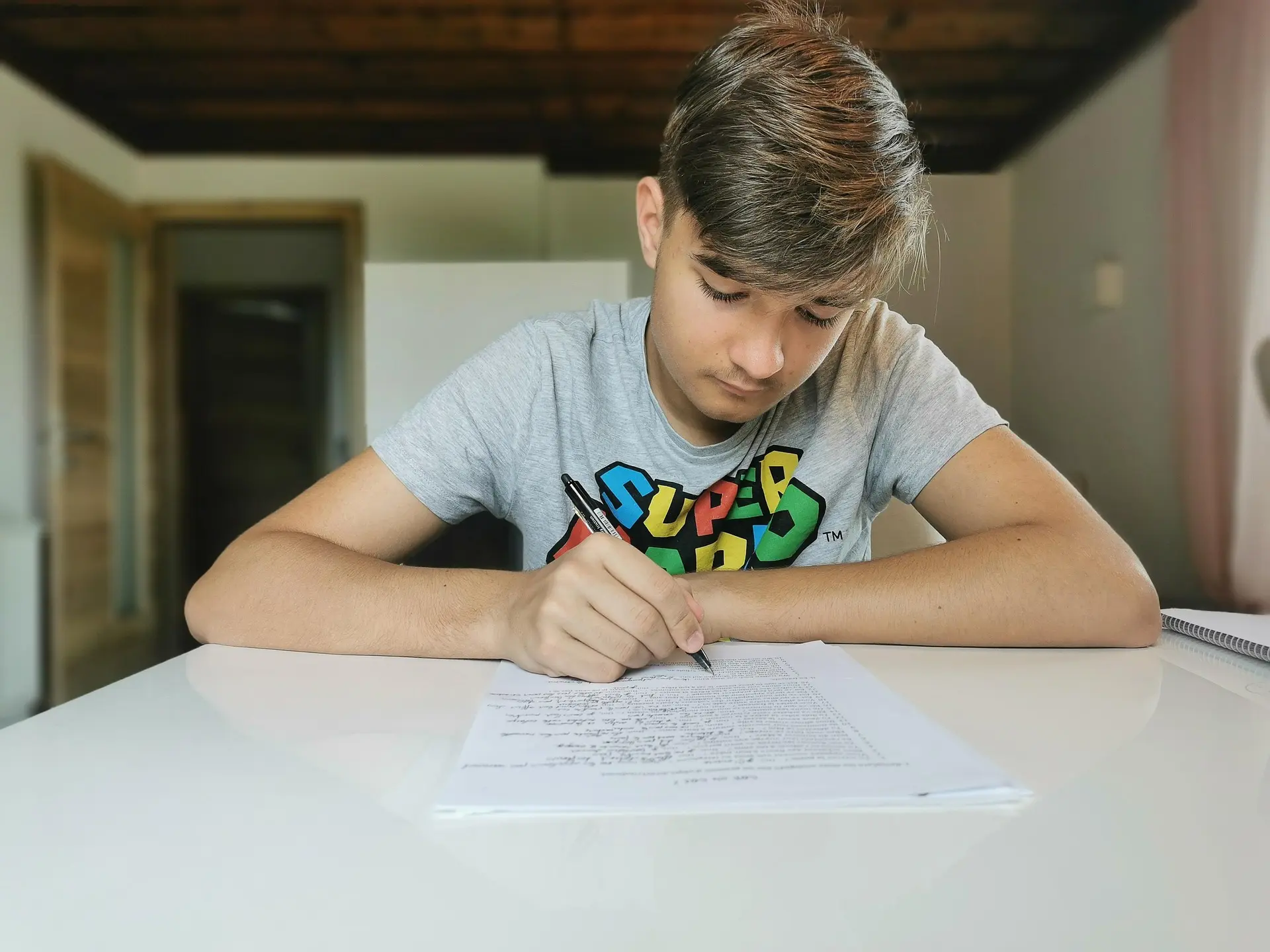
Can you homeschool middle schoolers? Yes, but not without understanding adolescent needs and how to meet them. That will be the topic of this post. Ah, adolescent rebellion, that unavoidable thorn of parenting. Even the sweetest, most wonderfully raised children can give us a run for our money once puberty hits, hormones rage, and developmental necessities rear their…eh hem…not-so-attractive heads. I’ve seen many parents who did well in the younger years falter at this tumultuous stage of life.
Now, perhaps you’ve been homeschooling because you see not all is well with the world of mainstream education, both public and private – and maybe even Waldorf. You want something different for your youth, and you’ve tasted the extraordinary benefits of this path. Likely, you’ve developed healthy routines at home that leave everybody feeling better. Your children also get to work at their own pace, freeing them from the inferiority/superiority complexes many students inherit at school. Perhaps you’ve woven travel into your schedule and allowed for the free exploration of topics they’re interested in. Most important of all, you see your child having time and space to become fully themselves, which is the crown jewel of homeschooling. (This last point could be the subject of an entire book.)
And Then, the Rebellion
Yet, despite having done everything “right,” your child is getting older and starting to rebel. They’re not the sweet, amenable child they once were. Maybe it’s just a slight annoyance, or maybe you’re tearing your hair out over it. Either way, we must understand that even the healthiest, most idyllically raised children rebel eventually. One of the most innocuous examples comes from a friend of mine in Canada. She had been an exceptional mother from the very beginning, and when her boy turned 12, he started saluting her and replying, “Aye aye, Captain Mommy-Bob!” when she asked him to do something. It was cheeky, cute, and harmless. That same youth later said in earnest one day to his mother, “You know if you keep pushing me, I’m going to rebel.” Cheeky can become a verbal slap in the face.
Now, I know what some of you are thinking, which may be why you’re reading this post. Your homeschooler comes to you one day and says, “I don’t want to homeschool anymore. Send me to school.” I’ve heard it many times, and you may be wondering, can you homeschool middle schoolers? For some parents, that becomes a worthy exploration with their child. Yet, for others, it can shatter their image of an ideal life. Either way, I’d like to give you some thoughts to consider, but before I do, let’s understand why rebellion is necessary. Then, we can intuit more skillfully how to meet our child’s underlying need.
The Key to Homeschooling Middle Schoolers: Understanding the Rebellion
If we want to know whether we can continue to homeschool middle schoolers, we must understand, why do they rebel? The answer is simple: to become fully human, you need to become fully individual. There is no other way. That’s why even if you have raised them with the best values in the world, they will eventually need to question and test those.
Every true human is born with the latent desire for freedom, and I don’t mean the freedom to get filthy rich at the expense of others or do egotistical things without care or concern for the environment. That’s not freedom, just a fancier form of bondage; real freedom comes from knowing your higher self. The only way to get there is to build it from the inside out. The quintessential human need is therefore to bring forth what is within ourselves. Questioning what life gave us as children is part of that.
So, if you respect their growing need to form their own judgments and opinions, gain increasing say over their decisions, and broaden their horizons, they will respect you. That’s the first step to knowing if we can homeschool middle schoolers. Don’t worry, I will share some success stories below.
The Choice to Homeschool Your Middle Schooler
As children become pubescent, they require increasing amounts of autonomy. Does this mean it becomes a free-for-all? Not at all. You still know more about the world than they do. Do you remember being that age and how clearcut and black and white everything was? Since you’ve grown up, you have surely noticed the nuances and finer distinctions about the world.
When they therefore say in 7th Grade, “Send me back to school,” that doesn’t necessarily mean that’s what needs to happen. Adolescents can become angsty and misguidedly think this or that outer thing is the problem. We used to see this in the Waldorf School as well, how after 5th Grade they would say, “I don’t want this Waldorf stuff anymore. Send me to a real school!” These examples don’t say what you’re doing is wrong. What they say is your children need something new, and that doesn’t mean you need to give up on homeschooling. You just need to change something.
That change almost universally can be described in a word: cosmopolitan. They need bigger horizons, new challenges, and novel social experiences. They want to become worldly. That’s why we started Enkindle Academy, to give students from around the world a chance to interact with a new teacher and peers outside the home, and to do it internationally. In our live classes, we currently have students in 19 states, countries, and/or provinces across the world spanning 11 time zones. Our prerecorded classes have students from Alaska to Australia. Truly, it can be said that the sun never sets on Enkindle Academy. These students meet with each other and their teacher on a weekly basis, and many of them send letters, packages, and even make visits to each other across oceans. They also do the same with me, and it’s the most gratifying thing.
Is Homeschooling Right for Every Middle Schooler?
I’m not saying homeschooling is the right choice for every youth. Ultimately, the truth will emerge out of the intimacy of your relationship with them. That being said, here are some stories from my experience. We had a student who took our classes from 5th-7th grade. She was a wonderful pupil with whom I shared a deep connection. At the end of 7th grade she thought she wanted to try the big high school. There was an elite one near her house that offered her family a great deal on tuition. At the beginning of the next year, the student went and found out it was not all what she expected. The schedule was more demanding and exhausting than she thought it would be. The social scene shocked her, despite being a tuition-based private school. She found her peers were more interested in interacting through social media than live and in-person. They felt like a different breed of human altogether.
So, she returned to Enkindle Academy within a few weeks and ended up graduating with our 8th Grade class. Now, she is still homeschooling in high school, has taken up the bass guitar, and intends to travel the world. Sometimes they need to experience the other side to see the grass isn’t greener.
How to Decide What is Best
Back when I taught at the Asheville Waldorf School, our faculty chair used to remind us to always return to the question, “What is best for the children?” To illustrate this in action, here’s another story from a current high schooler who had finished our 8th and 9th Grade blocks, after which he was sure he wanted to go to school. His poor mother came to me lamenting about what to do. She had created an idyllic homeschool life on their rural, wooded property near the ocean. He and his two younger siblings had grown up spending days in nature in a world of rich imaginative play coupled with solid academics. This son and the middle sister had both acted in a theater camp I did with their local community. It was one of the healthiest childhoods I had ever seen.
The mom felt gutted when her son wanted to turn away from this dream life. So, I coached her with the above question, inviting her to work through her fears of what the answer might be. It was a sacred experience to watch her become that open hearted and humble. Then, a few days later as if hearing her unspoken invitation, the boy came and said, “What I really want to do is learn sailing and navigation. If we can do that, I want to keep homeschooling.” His real need emerged, and now their idyllic homeschool experience just leveled up to version 2.0 – sailing school. He needed broader horizons, literally. That didn’t ultimately mean turning their back on everything they valued. It just needed self-honesty and creative thinking.
So, if you want to know what to do, observe your child, ask your inner world for guidance, and sleep on it. Ask that what is best for them show itself. You will know intuitively what the right thing is.
So, Can You Homeschool Middle Schoolers?
Yes, you can homeschool middler schoolers if that is the calling on your heart. Our thriving program serving homeschoolers across the globe is a testament to that. You just need to understand their needs and find ways to make their world bigger while staying the course.
Although I wasn’t homeschooled, the example from my life is that in the summer between 7th and 8th grade, I started taking flight lessons. Talk about big horizons. I also got a drum teacher, and so I spent my days flying and playing drum kit. My only regret is I had to spend about 7.5 of those hours at a school and wish I had the opportunity to homeschool.
So, yes, you can definitely homeschool middle schoolers. Just remember adolescents need to grab the world with their heads, hearts, and hands in new ways starting in middle school. One of our recent 8th Grade grads is already an expert woodworker, blacksmith, and recorder player, among other things. My family stayed with his over Mayfair last year, and I was astounded by the quality of his craftsmanship I saw. It was a perfect picture of an ideal homeschool middle school life – the time and space to become oneself.
How to Connect
Enkindle Academy inspires young minds using a regenerative, Steiner-based approach to homeschooling. We offer prerecorded and live lessons for students in grades 5-9, encouraging students to deepen their reverence for nature and the living reality that permeates it. We teach all academic subjects plus creative writing and language arts, empowerment groups for teens, and soon to add fine arts.
Leave a Reply
You must be logged in to post a comment.