
In this post, we talk about how to help your child succeed in math with five practical tips. Many parents lament teaching math to their child because, let’s face it, it’s hard. Math is where you either get it or you don’t. It’s not like history, geography, or language arts, where there’s more nuance and gray area. However, an understanding of the nature of math, how it’s connected to the whole human being, and the world of nature can help us unlock how best to teach it.
Tip 1: Move the Math Facts
Math is music is movement. We need to engage the whole being of the child in learning it, for math lives also within the human being. Thus, movement helps unlock it from its unconscious depths. Don’t let your teaching just be a head thing because then your child will have more difficulty remembering what they learn, they will get more tired doing so, and their enthusiasm will soon dry up.
From the early grades, engage them in movement. For example, when they’re learning the times tables, have them toss a beanbag from hand to hand as they recite each step, “7…14…21…28…” etc. Or, toss the beanbag back-and-forth with them. Or, have them step and clap along with each number they’re speaking. You can even come up with a melody and sing the times tables forwards, and backwards. Even in the older grades, try putting a grid on the chalkboard. Then, put a tennis ball inside a thick sock, wet the part where the ball is, and have them launch it at the board. Wherever it leaves a mark, they will have to multiply that number by, say, 15.
I could come up with countless variations of how to move math, but the point is the movement. Connect movement with thinking, and you will see much better results. There are too many ideas to share in this post, so sometimes parents contact us for private mentoring.
Tip 2: Practice Mental Math Daily
Mental math is doing arithmetic mentally, in other words, without pencil and paper. This exercises their imaginative capacities and develops a strong sense of number. You can start with simple arithmetic when they are in the younger grades, such as “7 x 8 = ?” As you go up the grades, your questions can becoming increasingly complex, such as “Imagine you have a sheep farm with 1288 sheep separated equally into four different pastures. How many sheep are in each pasture?” Remember, no pencil and paper, that’s the key.
One of my favorite ways to do mental math is to tap numbers out on a bell and have them do the calculation. In other words, “[7 taps] x [8 taps] + [4 taps] divided by [4 taps] equals?” This works not only their math sense but also their listening. Do this sort of thing every day and you will notice your child calculating change in the checkout line before the cashier has even punched it into the cash register, for example. It’s fun!
Make sure to practice estimation as well. For example, before they do a long division problem, have them estimate the answer and then see how close they get. Practicing estimation builds their intuitive number sense. Thereby, we engage more of the human being than just the head, and they develop other important capacities along the way.
Tip 3: Keep Practicing What They Learned in Previous Years
Math is a language you have to keep practicing to stay fluent. Even if you introduce new skills this year, make sure to continue practicing what they learned last year. For example, in our 5th Grade Curriculum, they learn decimals. They should’ve done fractions in fourth grade. So, in all of their fifth grade lessons, they should be doing some fractions practice, even just one or two problems is enough. Or, they can have special practice periods throughout the week, maybe two or three of them, where they continue practicing fractions from fourth grade and long division and multiplication from earlier grades.
Tip 4: Make It Interesting
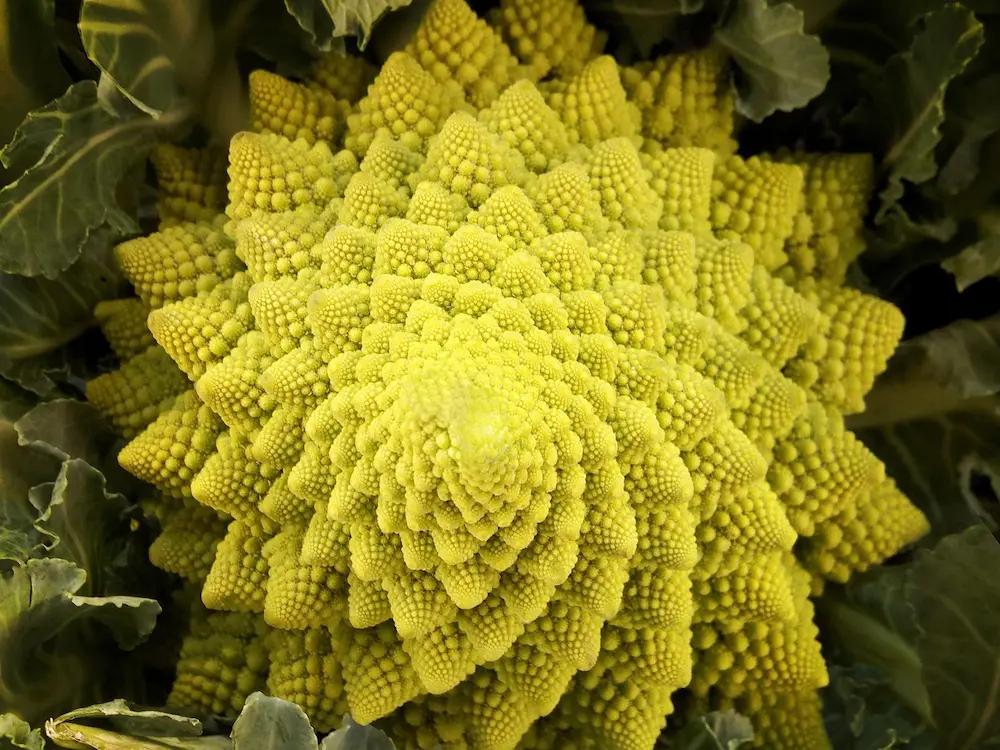
There is no reason why your student should be unable to find something meaningful in math because nature is intrinsically interesting and math comes from nature. For ideas, check out Michael Schneider’s book A Beginner’s Guide to Constructing the Universe. This text demonstrates how numbers are like beings whose significance is interwoven throughout creation and the thousands of years of human culture. You should also connect numbers to geometric forms in nature such as flowers, shells, the spiral patterns in waves, crystals, etc.
It is not hard to create enthusiasm for the sublime truths contained in math if we just open our eyes and go for a walk. If our math teaching in society has failed it’s only because we’ve killed it with dry abstraction or an over-focus at too young an age on practical applications, alone. Children aren’t interested in the merely practical. They need to love a thing to learn it. That’s why our curriculum connects math in meaningful ways to the artistry of nature all around us. We start with Freehand Geometry and Number Mysteries in 5th Grade. In 6th Grade we begin using precision tools and artful constructions to connect academic rigor with beauty. Moving into 7th Grade we explore the geometry of the Golden Ratio. Finally, in 8th Grade we do 3-D Geometry, and on it goes. Checkout a free sample lesson to see how our work enthuses young hearts and minds.
One more tip is to give your children not just math practice but also math puzzles. They’re fun and gratifying to figure out. Numerly is a great site to find those.
Tip 5: Make it Beautiful
If you want to help your child succeed in math, you cannot simply teach to their heads. You have to engage their hearts. In the human brain, the hippocampus is part of the limbic system. The former helps us retain memories and the latter is the center of the feeling life. That’s why what makes a strong feeling impression on us etches itself into our memory (Pessoa, 2017).
Thus, to help your child succeed in math, beauty is a must. So, for example, when they make precise geometric constructions in 6th and 7th Grades make sure they have time to decorate them artistically. Here are some examples:
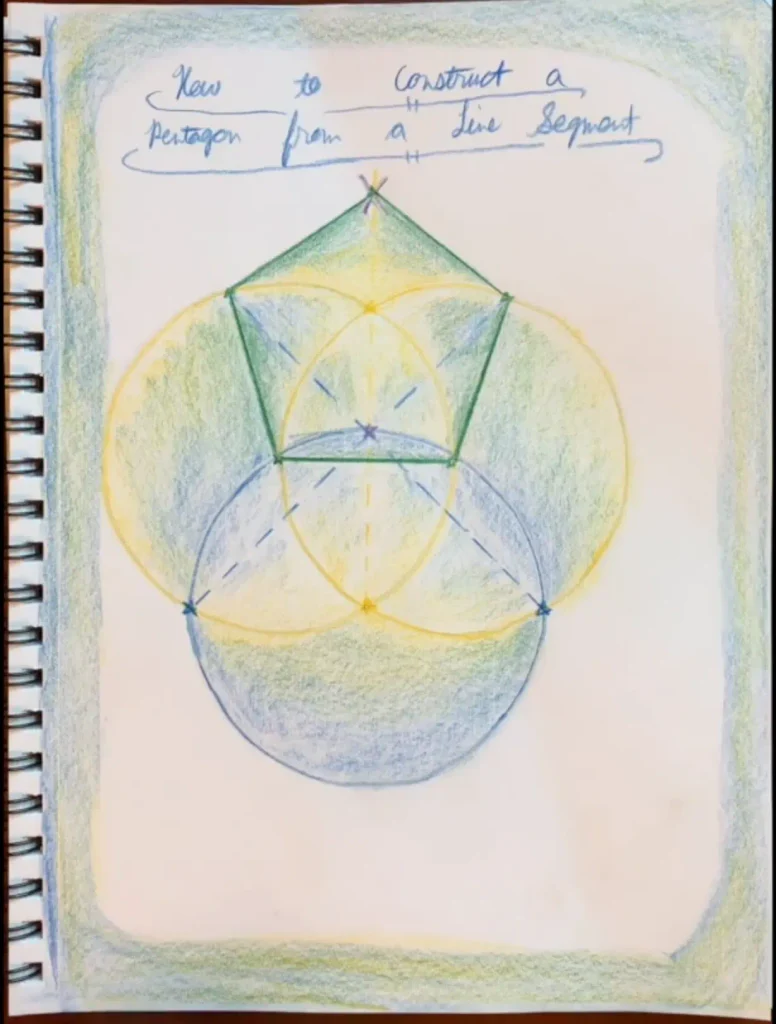
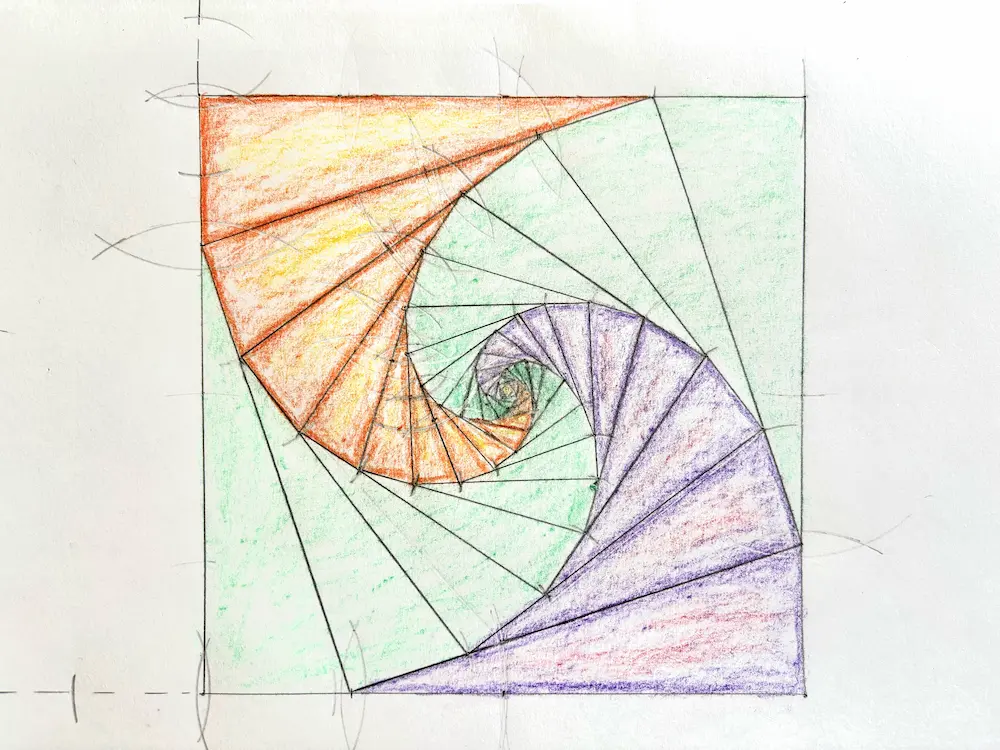
For the Ancient Greeks, truth was not just true but also beautiful and good. So, too, should be our math teaching.
How to Help Your Child Succeed in Math
Many children who don’t succeed in math struggle to find meaning in it. When it becomes a lifelessly rote activity, we’ve lost the thread. They certainly need to practice a lot to become good at it, and like becoming good at anything else, that can feel fatiguing. Yet, if we’ve laid the right foundations, they will have the energy to do the work required to create mastery.
Start with understanding the rightful place of math in the sublime kingdom of creation and how it lives also within the human being. Then, use these principles to craft your teaching. If you know how to bring it in the right way, you can help your child succeed at math.
How to Connect
Enkindle Academy inspires young minds using a regenerative, Steiner-based approach to homeschooling. We offer prerecorded and live lessons for students in grades 5-9, encouraging students to deepen their reverence for nature and the living reality that permeates it. We teach all academic subjects plus creative writing and language arts, empowerment groups for teens, and soon to add fine arts.
Signup for a free sample lesson now.
References:
- Pessoa, L. (2017). The influences of emotion on learning and memory. Frontiers in Psychology, 8, 1454. https://doi.org/10.3389/fpsyg.2017.01454
Leave a Reply
You must be logged in to post a comment.