
Should you do summer academics? I get this question from parents often. The temptation is to help children catchup or gain extra practice. Math is an especially common wish for summer academics. In this post, we will look at this question from a few angles to help guide your decision making. This is not meant as a prescription or set of rules. Rather, our purpose is to explore seasonal cycles and how they influence our children.
The Rhythms of Learning and How They Affect Summer Academics
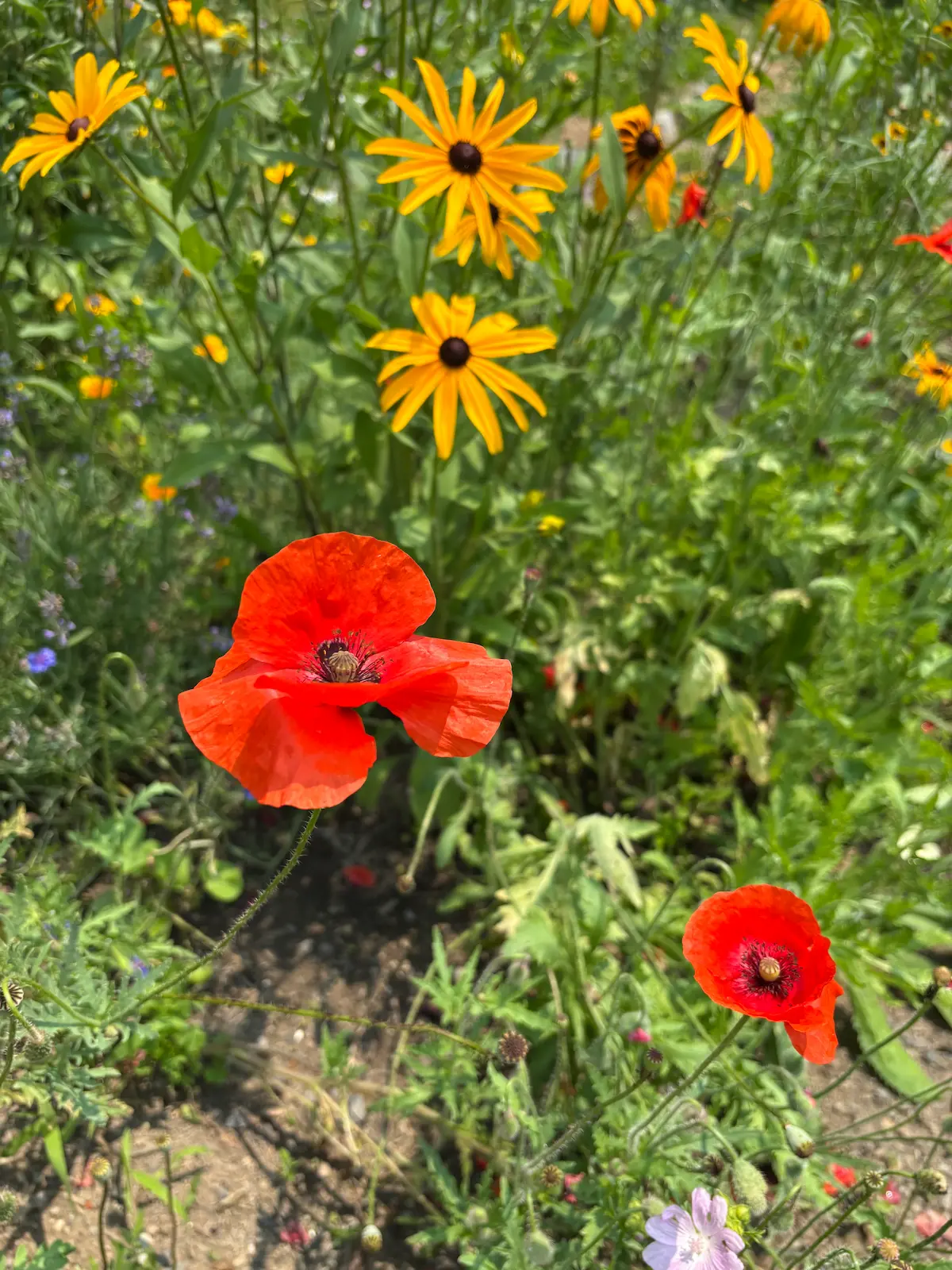
All things in nature work in rhythms – they “breathe.” Even the cycle of day and night is a kind of breathing between light and darkness. The earth has her own breathing cycle. In the summer, she exhales in the beautiful growth of plants reaching out towards the cosmos. The opposite inhale starts in fall with the withering process. Leaves, fruits, and seeds fall down to the earth. She calls her substance back to herself and is most inward in the dead of winter.
We are nature, so this process permeates us, too. Imagine an apple tree with its roots in the ground and trunk and branches reaching up towards the sky. Now, picture this tree as an upside down human being. Its roots are our head, its trunk is our trunk, and its limbs are our limbs. Now, contemplate where the energy is most active in each part of the tree during the cycle of the year. The energy lives in the roots in winter. Around Groundhog Day, the sap begins to rise up the trunk, limbs, and branches. In spring, blossoms appear and leaves unfurl. By summer, the tree is full of foliage, swaying in the breeze, absorbing the sun, and making fruit. Fall comes, the leaves change colors, and together with fruit and seed they fall down to earth. The tree withdraws its sap back down the roots for the winter.
In the same way, human head-thinking forces are strongest in the winter. Limb-will forces are strongest in summer. Chest-feeling forces are strongest in spring and fall.
So What?
To the question about summer academics, consider what you’re trying to accomplish. Summer can be a rich time of learning. The outdoors are ideal – think gardening, building structures, going on adventures and field trips. Art, as a limb activity, is also ideal during this time. Topics like Geography and History can also work well at this time as their birds-eye-view thinking matches the excarnating tendency of summer. However, maybe you DO want to practice math. Perhaps you do it in conjunction with building a raised garden bed, chicken coop, or some other measurement-based project.
Now, that being said, each child is unique. My father taught himself algebra and calculus. Some students are going to do math any day of the year, so let them! You may also feel like your child has to catch up because there’s no other time to do it based on your life circumstances. If that’s the case, understand each day has its own breathing cycle. To support you, I have created a free rhythm guide that helps you structure your homeschool days which you can signup for here. In that guide you will read how the spirit is most awake in the head in the morning and starts to descend towards the limbs as the day wears on. Therefore, if you are going to practice math in summer, it is best to do it as early in the day as possible.
Cultivate Instincts, Not Dogmas
For the record, I’m a teacher who’s really good at math, and even I forget how to do it when warm breezes are lulling me to the beach. That’s why in our yearly academic calendar at Enkindle Academy we generally put math in the colder months, not in the warmer months. That being said, I say these things not to create dogmas but to help parents cultivate an instinct for how to harmonize best with these cycles of nature. If you’re considering summer academics, perhaps prioritize subjects that work with bigger themes like mapmaking and navigation as opposed to the minutiae of algebra.
Parent Mentoring
We are considering offering parent education here at Enkindle Academy. This could take the form of live parent training groups, individual mentoring, short blocks on how to teach various subjects like math, history, language arts, etc. It could also take the form of families submitting student work for feedback on how their student is doing. We are open to whatever other suggestions you have. If this interests you as a homeschool parent, please Contact Us, and let us know your wishes.
How Else to Connect
Enkindle Academy offers prerecorded and live lessons for students in grades 5-9, encouraging students to deepen their reverence for nature and adopt sustainable, regenerative attitudes towards her. We teach all academic subjects plus fine arts, creative writing and language arts, and empowerment groups for teens.
Our Creative Writing Class meets weekly. We are always accepting new students, and enrollment is growing rapidly. When we have enough students, we open up new sections. Visit us at the following link to signup or get more info: https://enkindleacademy.com/live-creative-writing-for-youth
Our Teen Empowerment Class also meets weekly. We are always accepting new students. If you want your youth in a tightly knit, warm, and welcoming group of peers with a loving guide who keeps them focused on the good, beautiful, and true come check us out. Visit us at the following link to signup or get more info: https://enkindleacademy.com/live-teen-empowerment-class.
Leave a Reply
You must be logged in to post a comment.