In this post, we explore the basis of a spiritual education. At first glance, that may raise some eyebrows. “What does he mean by a ‘spiritual education,’” some may wonder for an academy that claims to be secular. I challenged the term “secular” in an earlier post, arguing it’s not well-defined. That to me seems deliberate on the part of education authorities because it allows them to avoid the responsibility for truths which may make some people uncomfortable. Suffice it to say, as long as a “secular education” is defined as non-religious, Enkindle Academy fits the bill. We do not provide a Christian, Buddhist, Jewish, Vedic, Islamic, nor any other explicitly religious education. On the other hand, students learn about all those traditions in-depth, for they reveal important truths about human life. In this post, I argue the basis of a spiritual education through a philosophical lens, not a religious one. My goal is to share thoughts that anyone can think for themselves.
So, let’s begin. We are born, learn to walk, talk, and eventually think. At first, we feel so joined with the world that we don’t even question it. Many of us will even cry when our mother puts us down for an instant. This feeling of oneness with the world persists for some years in the life of a child. We even call ourselves by the third person for the first year or two of speaking.
Yet, one day we realize we are not one with the world, as least not in appearance. The world is full of puzzles. We don’t automatically understand the phenomena of nature, the language of animals, or the thoughts and feelings of other people. The world confronts us as a riddle, and we feel ourselves confined to a body limited in its ability to think and perceive beyond the here and now.
The Quest for Knowledge
Unsatisfied with this experience of ignorance, we seek to understand the world, to bridge the divide between ourselves and it. We turn to religion, science, philosophy, education, elders, etc. for these answers. This may lead us to study, prayer, meditation, art, etc.
Though not all people care to find answers to life’s deepest riddles, virtually all of the people I call my friends do. We tend to agree with Socrates that, “The unexamined life is not worth living (Plato, 1997, Apology, 38a).” A student in our Teen Empowerment Class today recalled the experience of nearly drowning which led him to become passionately interested in the spiritual. At some point, we all realize we are going to perish, or at least that our bodies will. We may also have experiences of the ultimately unsatisfactory nature of a life satisfying sense pleasures, alone, since such a life only leads to more desire, not deeper meaning.
The realization then dawns on us that if we never discover ourselves and the world to be something more than what we see, then what? This crisis can be disorienting or even terrifying, and it often is for people in midlife. Many children also begin to experience pangs of this around the age of 9, thus rendering them, too, in need of a spiritual education.
Self Knowledge and Spiritual Education: Who Are We, Anyway?
Well, who are we anyway? I would say, infinite beings having a finite experience. It’s like being an angel enchanted into a mineral body. Can I prove that to you outwardly? No. I can only direct you to your own experience. I can, however, attest to my own, as well as the wisdom of countless sages over the epochs of human history. However, it’s not really my experience that matters for you anyway, and that’s just the point. Only you can experience your infinite nature. Here is a quote from Dada Ácárya Cidrúpánanda Avadhúta:
One day in 1989, at the Marga Guru Quarter in Madhumálaiṋca (Madhumálaincha), Lake Gardens, Kolkátá —after BÁBÁ’s breakfast— I was sitting in profound silence with Him. He was seated on the bed; I was sitting on the floor. I rested my head on His lap, and He was gently caressing me. In that moment, silence enveloped everything. I had no awareness of who I was. I had no name, no form. I was neither male nor female, neither of one race nor another. I didn’t belong to any nation. There was no body, no mind. Only a boundless presence —pure being. Even the “I” dissolved. Only an “am-ness” remained, and even that began to evaporate.
There was only peace… infinite peace. A silence so vast it swallowed all distinctions. From that silence, a subtle joy arose, like a fragrance from a flower unseen —a joy without a name, without a cause. As it blossomed within that dissolving “am-ness,” I heard His voice, tender and intimate, as if echoing from the very Source of all that is: —“My little boy, it is your true nature (Cidrúpánanda Avadhúta, n.d.).”
The Turn Inwards
So, those of us who feel the longing to experience this true nature turn inwards to discover it. That doesn’t mean rejecting the senses per se, although it does mean changing our relationship to them. It is, after all, by dint of our incarnation as sensory beings that we experience ourselves as separate from the world. So, we have to do something about this. However, on the one hand, it wouldn’t do us good to reject them – and some seekers have done so with disastrous consequences. Rather, it is perhaps that we need to discover something more than mere senses. It’s like we need to add something from within to our sensory experience of the world so that it becomes not a cause for separation from the world but of union with it. But, how?
Two Paths of Spiritual Education
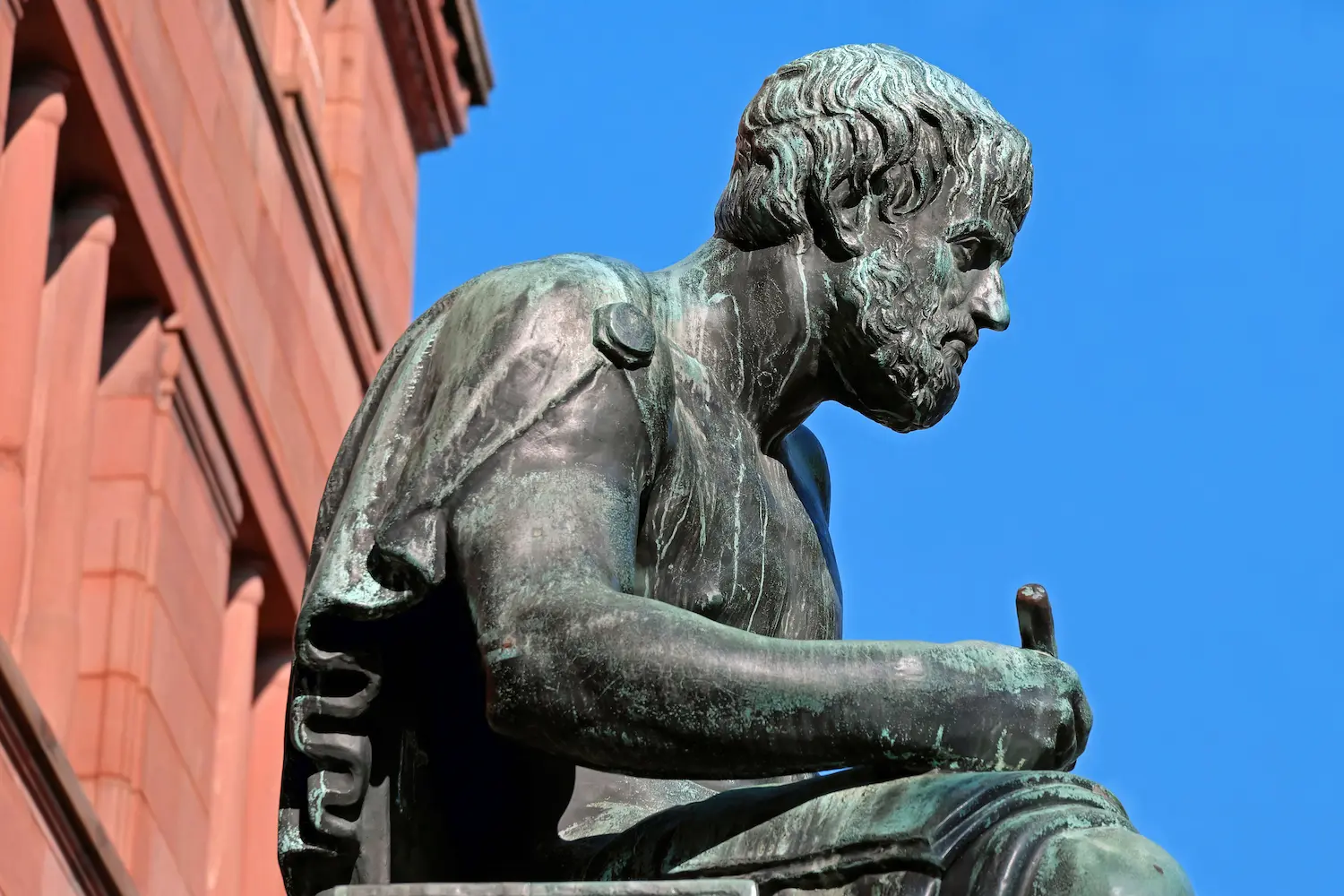
As long as I’ve lived, there are two paths I’ve encountered to complete our spiritual education. The first is the ancient Eastern way associated with the Indian yoga path and later espousd by Plato. I describe this path as the path of, “All is one.” This method transcends the temporal by withdrawing the senses to experience mystical union with the infinite. As such, it is a path of outer and inner purity because such is necessary to still the mind enough to experience these transcendent states. This path starts, in a way, from the infinite and works into the sensory. It is the path of Plato’s realm of the “forms,” so to speak. The second path is the more modern way associated with Aristotle and Rosicrucianism. This path does not withdraw from the senses but does the opposite, in fact. It engages the sensory world by completely emptying the self, letting the impressions of the sensory world fill oneself, and then recalling these impressions in imagination to intuit the divine principles within them. This more Western path uses the senses to work backwards from the sensory to the infinite.
Spiritual Education as a Path of Love
Which path is the right one? Decide for yourself, but it does bear on how we give our children a spiritual education. Probably in giving them a well-rounded picture of human culture, we should introduce them to the spectrum of paths humans have taken to cross the abyss of ignorance to commune with all that exists. However, I can make a universal statement about what I see as the basis for a true spiritual education.
To be incarnated is to be finite. It’s just the way of things. Our earthly consciousness, by nature, is earthbound. Some are tempted to see this as a cursed condition, a prison for the soul and spirit. I don’t see it that way. Rather, I see it as a classroom. To revile and reject our incarnation will not allow us to become fully human. On the contrary, it will make us less human because only by being incarnated can we experience the joys and challenges of life, and it is those that teach us how to love. That is the goal of earthly human life.
Love applied means taking an active, enthusiastic interest in the phenomena and beings of the world. To love something or someone is to know them. It’s not enough to have a nice feeling and call it love. No, love is an act of will – the willingness to observe, imagine, and ultimately understand another human being from the inside. That is true love. That is also the basis of a true spiritual education, and that is what we offer at Enkindle Academy. So, my advice is let your education of the children invite them to fall in love with the world and all its manifestations, to take an enthusiastic interest in all they encounter, even those things they may not like. Let them, through interest, become re-joined with the world they were once sundered from. That is, after all, the goal of life, is it not?
How to Connect
Enkindle Academy offers prerecorded and live lessons for students in grades 5-9, encouraging students to deepen their reverence for nature and adopt sustainable, regenerative attitudes towards her. We teach all academic subjects plus fine arts, creative writing and language arts, and empowerment groups for teens.
Our Creative Writing Class meets weekly. We are always accepting new students, and enrollment is growing rapidly. When we have enough students, we open up new sections. Visit us at the following link to signup or get more info: https://enkindleacademy.com/live-creative-writing-for-youth
Our Teen Empowerment Class also meets weekly. We are always accepting new students. If you want your youth in a tightly knit, warm, and welcoming group of peers with a loving guide who keeps them focused on the good, beautiful, and true come check us out. Visit us at the following link to signup or get more info: https://enkindleacademy.com/live-teen-empowerment-class.
Signup for a free sample lesson now.
References
- Plato. (1997). Complete works (J. M. Cooper & D. S. Hutchinson, Eds.). Hackett Publishing Company.
- Cidrúpánanda Avadhúta, D. Á. (n.d.). A BÁBÁ Story [Facebook post]. Facebook. https://www.facebook.com/
Leave a Reply
You must be logged in to post a comment.