
In this post, we are going to discuss forward-backward thinking and how our curriculum – especially our Creative Writing and science classes – develops this. Now, you may be asking yourself, “What does he mean by forward-backward thinking?” Let me explain. Typically, we only think forwards because that is what we use to navigate the physical world. We think to ourselves, “I need to get the children in the car. Drive to the grocery store. Get groceries. Go to the gas station and fill up. Drop my son off at the soccer field, and bring the groceries home.” Then, we execute this methodical series of steps, and all is well. This I call “sense-based thinking” because it’s based entirely on what we observe. It’s also how we get stuff done. Where would we be without it? Certainly not here.
Now, on the other hand, how many of us at the end of the day before bed stop and think about our day in reverse? If so, it might go something like, “I brushed my teeth. Before that I put on my pajamas. Prior to that I played my saxophone. Before that, I had a disagreement with my wife about finances. Wow, I see now why I was so agitated during saxophone practice.” When we think in reverse, we see things differently, discovering how causes and effects play out during the day. This backwards thinking is a kind of super-sensible thinking because it defies the ordinary flow of time. It relies on the imaginative pictures we make of the day’s events and strings them together in such a way that allows us to see things differently. Thereby, we glean insights otherwise unavailable to us.
The Budding of Forward-Backward Thinking in Youth
Around the age of 12, we start developing this capacity for cause and effect thinking, aka, forward-backward thinking. As the self incarnates more from the periphery to the point, our thinking becomes increasingly super-sensory, or at least it can if we cultivate it. You probably took for granted when this capacity developed in your own life. However, if you reflect on it, you will realize how it gave you the capacities for:
- Why things happen the way they do,
- Understanding how the events and people in our lives made us who we are, and
- Intuition about the future.
It may have also made you a more creative thinker.
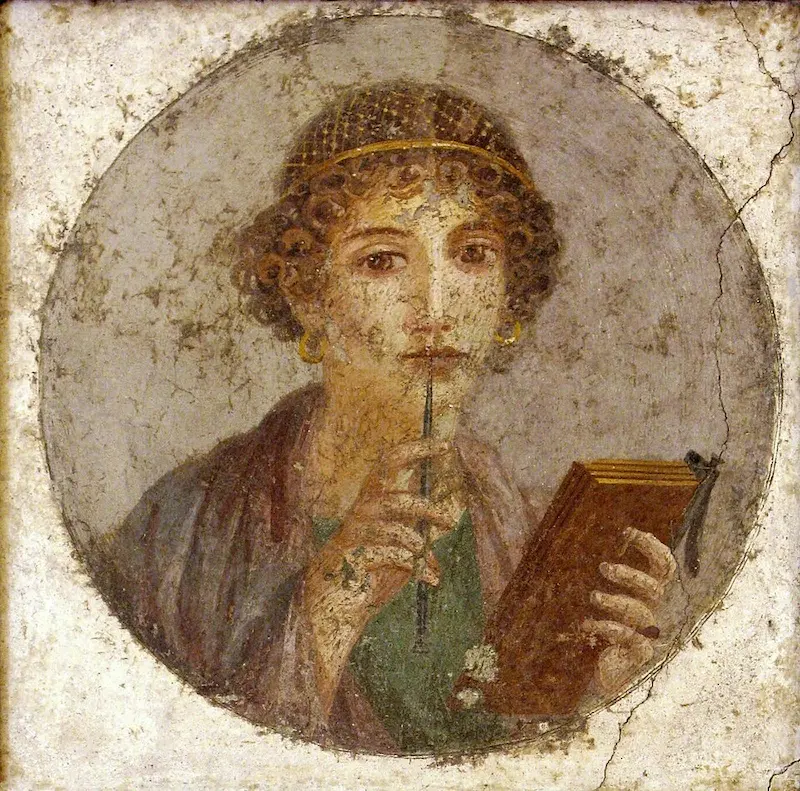
Our Creative Writing class serves as a springboard for developing this type of thinking. Last week, I had the students write about the life cycle of a plant from beginning to end. The purpose of this exercise was to get them to string together the events in a plant’s lifespan from one transformation to another in an unbroken whole. This week, the assignment was to do the same thing but in reverse. Now, they have to think about the destiny of that plant – its teleology, to so speak – and keep that in mind as they progress backwards through the stages of its development. Plants are particularly potent for this exercise because they live, transform, and are easy to observe.
Why Forward-Backward Thinking Matters for This Generation
Let’s take this a step further and explore why this matters so much for the present time. Many people today wonder what’s wrong with the world. How did we get to this place where it feels like we teeter on the precipice of one catastrophe or another? Climate, international relations, health, environment, etc. The human report card isn’t full of A’s right now, let’s just say that.
But, why? What is the cause of all this cultural decay? One way to explain it is through how materialistic and calcified our thinking has become. Just look at how unable the political Right and Left are to actually dialogue meaningfully anymore. Or, look at the trend towards dogma in religion, etc. The human capacity to generate novel, effective solutions may be at an all-time low and it’s because we are so sense-bound in our thinking. Imagination comes from a higher place.
Our world requires a new generation of creative thinkers, compassionate feelers, and capable actors who can muster the imagination required to solve big world problems in holistic ways that preserve the four kingdoms of nature: mineral, plant, animal, and human. Students should do things like creative writing whether their destiny is to become the next Shakespeare or not. The point is to learn to live as art. Artists work from whole to parts and are thereby able to re-member the atomized parts of human society that require healing…in whatever field they work – science, engineering, medicine, diplomacy, education, economics, etc.
Forward-Backward Thinking in Science
We’ve so far discussed this forward-backward thinking in relation to Creative Writing, but it also plays an important role in science. I guess that’s because real science and real art are hard to distinguish – they work in the same holistic way. As an example, the evolutionist Ernst Haeckel and spiritual scientist Rudolf Steiner looked at the same natural scientific data. They observed the same fossil records, embryological processes, and so on. However, they formed entirely different conclusions. This proves that the conclusions of so-called “science” don’t simply follow from what is observed. Sensory perceptions don’t think for us. We still have to be able to string them together creatively to make sense of the data in accord with reality.
The spiritual scientific criticism of modern materialistic science is that it only looks at causality from one point of view. However, time works in two streams – the sensory stream which moves from past to future, and the super-sensory stream which moves from future to past. If you don’t believe me, look at your life and observe all the people you encountered and the things that had to happen to make you who you are today. Then, the two-stream picture makes more sense as we realize the future seems to have an effect on the past.
Another way to say it is this. Inside an acorn is the imagination, or potential, if you will, of a fully grown oak tree. The fully grown oak tree is the teleology – the purpose – towards which the acorn sprouts, grows, and develops. This future imagination draws the development of the sprout and sapling towards itself. When we start to realize, therefore, how the future has an effect on the past, we realize how useful it is to develop this forward-backward thinking. This is the basis of our pedagogy, and it comes into play especially in the upper grades science blocks we offer.
How to Connect
Our Creative Writing Class meets weekly. We are always accepting new students, and enrollment is growing rapidly. When we have enough students, we open up new sections. Visit us at the following link to signup or get more info: https://enkindleacademy.com/live-creative-writing-for-youth
Enkindle Academy also offers prerecorded and live lessons for students in grades 5-9, including the hard sciences where this forward-backward thinking becomes especially useful.
Leave a Reply
You must be logged in to post a comment.