
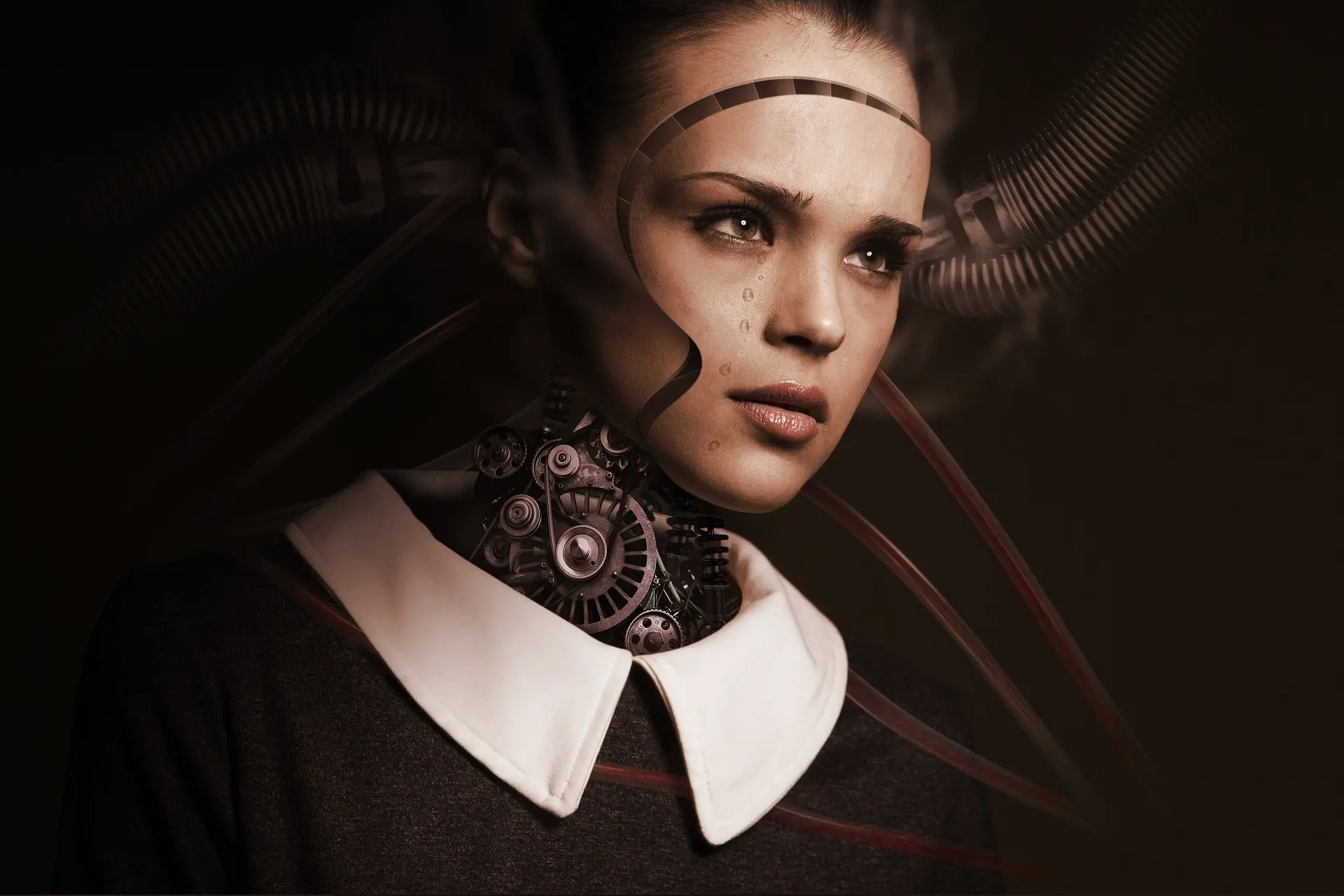
In this post, we will focus on explaining AI to students by explaining it to you, the parents. This will be part one of a two-part series. AI (Artificial Intelligence) is not as new as many people think. Aircraft autopilots, automobile GPS’s, website algorithms to calculate airfares, Google searches, scientific research processes, and more have been using AI for decades. My own father wrote a paper on how neural networks could be used in drug design back in the 90s.
It’s everywhere, and as much as we may want to keep it at bay, our children are going to get curious about it. Therefore, we better understand what this new technology is here for and how it functions. That doesn’t necessarily mean we have to use it, ourselves. However, we should understand it so we can freely choose how and when to use it or not. We want to remain its master and not its slave. Then, we will know how to explain AI to our children that they, too, remain free from its darker temptations.
So, How Does AI Function?
AI runs on patterns and calculated logic. It takes data inputs, for example, a picture of a cat with all its features like face, ears, body, shape, tail, etc. It doesn’t understand these features as “face, ears, tail,” etc. but detects edges and contrasts that form patterns, like an ear-like pattern. Then, its transforms these data into numbers. Next, it calculates probabilities based on the data, for example, 95% cat, 3% dog, 1% rhino, or whatever. Finally, it outputs “cat” as the most probable explanation of these data.
The same thing happens with language. When you type a question into ChatGPT, it converts your words into math, and then uses logic to analyze patterns and output the answer it thinks you most probably want to hear.
This might be a good time to ask how this differs from a response you receive from a human. Ask that question for yourself, and we will return to it another time.
What’s So Great About AI?
Aside from making your airline pilot’s job easier when landing in a fog-laden ice storm, AI shows a lot of promise for many human endeavors. It greatly accelerates and economizes human work. In pharmaceutical drug design, for example, you could have thousands or even millions of potential chemical combinations that could work for, say, a diabetes drug. Trying to find an effective compound the trial-and-error laboratory way, however, can take decades. AI can shorten that process to a matter of months or even weeks. Even if you’re not a fan a pharmaceuticals, think about other applications, like analyzing weather and rainfall patterns to predict and possibly prevent climate catastrophes.
These and many other uses besides could save lives and improve the overall quality of human life. It does us no good to be Luddites, here. Even if you still want to live off the land and keep yourself healthy with homeopathy and herbal remedies – as I strive to – this is important understand because this is the world your children are growing up into. You’re going to want to be informed in explaining AI to them.
The History of AI
The history of AI is a much longer topic than a paragraph can contain. However, there’s something important to understand in this. AI started by running on human-programmed logic. Eventually, it became capable of self-learning through “training.” That is to say, humans would input something like all of Shakespeare’s plays, and AI would “learn” them by categorizing all the data and finding patterns in the language.
In that sense, it has become an extraordinary compendium of all human knowledge from the past, insofar as it’s been trained by humans. Yet, that is exactly the point. AI can never come up with a truly “new” idea. It can only make something out of what already exists. Keep that in mind.
So, What Are Humans For, Anyway?
In explaining AI to students, this is perhaps the most important question to answer. Aside from the obvious notion that human experience is what it’s all about to begin with, consider that the most transformative discoveries in human society don’t come from more powerful computers. They come from more creative humans. AI can help us accelerate this innovative process in some cases, but it can never replace genuine human insight. Should we succumb to the temptation to let it think for us, we will dull our critical thinking skills1 and become less human over time. We will become more machine like, in fact.
What matters most in explaining AI to students, therefore, is not that your 13-year-old learns how to use ChatGPT. They can figure that out in about 15 minutes once they’re 18. Rather, what matters at this age is for them to develop the human skills that will lead to creative human mastery later on. Let me be blunt, your teenager doesn’t need ChatGPT nor any other chatbot. I have been witnessing firsthand the soul-withering effects of the presence of ChatGPT in young students’ lives through my tutoring practice. If you want some truly horrific stories, just look it up. They’re all over the news right now. Personally, I feel Chatbots are not for young people. What you do is up to you, but as a teacher I must convey a strong warning against it.
Rather, I recommend your student be 100% immersed in how to become fully human. Later, they can learn how to use the machine. This concludes part one of this two part series. Stay tuned for part two next week.
How We Can Help
Enkindle Academy offers prerecorded and live lessons for students in grades 5-9. We teach all academic subjects plus fine arts, creative writing and language arts, and empowerment groups for teens.
Signup for a free sample block now.
References
- Amoss, Dan. “A 200% Profit Opportunity with AGI the Gold Miner (Not AGI the Mirage).” Strategic Intelligence, September 2025.
Leave a Reply
You must be logged in to post a comment.