American society has long been questioning the role of arts in education. Are they necessary? As district budgets have tightened, arts have been the first to go in many cases. In fact, according to the Arts Education Data Project (AEDP), in the 2018–19 school year roughly 2.1 million U.S. public-school students lacked access to any arts education (defined as dance, music, theater or visual arts). So, are arts truly optional? What do you think? Yes or no, why or why not?
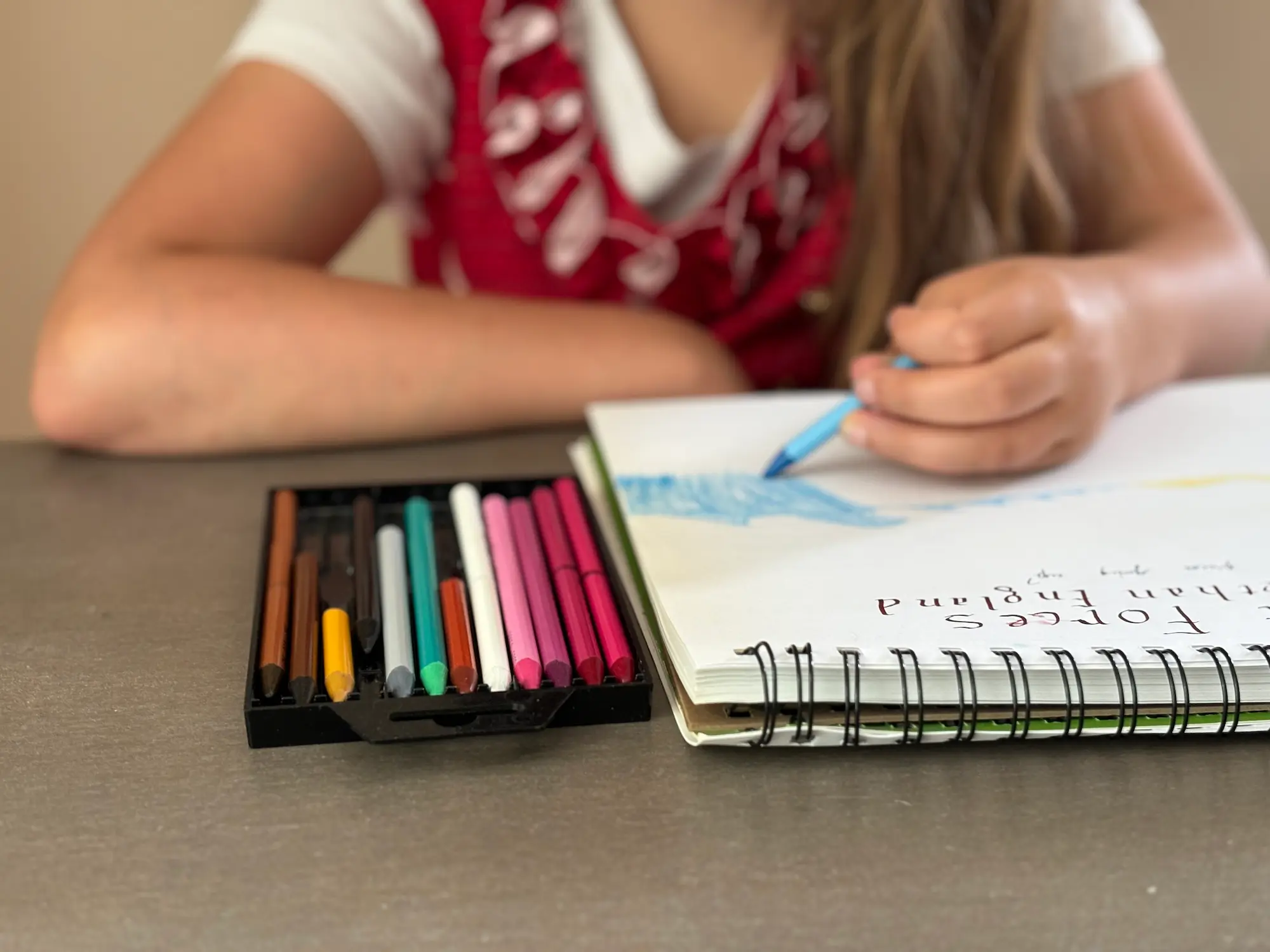
In many schools, drawing, painting, sculpture, music, theater, woodwork, etc. are their own subjects. That is not always true in Waldorf Schools and homeschools, however, for the arts are usually woven into the academic curriculum. A spiritual scientific approach to education makes art the means of education, in fact. For example, we render history lessons in drawing, poem, or sculpture. We teach math through music and rhythm. We make dioramas for geography, and so on. We also shape our lessons artistically through a certain rhythm of activities – speech, singing, mental math, movement, lecture, written and/or artistic work, etc. Imagination imbues our teaching. For example, a plant isn’t merely a collection of growing, respirating cells, although that is part of it. It’s also an organism that relates to sun, moon, planets, and earth. It’s a holistic picture much bigger than materialism gives it credit for.
So, what are the effects of keeping arts in education?
A study by Daniel H. Bowen and Brian Kisida, “Investigating Causal Effect of Arts Education Experiences: Experimental Evidence From Houston’s Arts Access Initiative,” (Houston Education Research Consortium 7, no. 4 (2019): 1-28), indicated tangible benefits of keeping arts in education. The researchers observed a decrease in disciplinary issues. They saw improvements in standardized test scores in writing. Finally, they noted increased empathy and compassion among student relationships with peers.
In other words, keeping arts in education made students not only better thinkers but more human, and that is exactly the point. After all, what is the ultimate goal of education but that? Here, we must quote Shakespeare’s wisdom from The Merchant of Venice, “The man that hath no music in himself, Nor is not moved with concord of sweet sounds, Is fit for treasons, stratagems, and spoils; The motions of his spirit are dull as night, And his affections dark as Erebus. Let no such man be trusted. Mark the music.” Art lies at the core of what it means to be a human being.
So, is our goal to create a generation of artists who otherwise produce nothing practical?
This, of course, is a silly question to anybody capable of observing and thinking through the issue of arts in education. However, the point of education, particularly from early childhood through eighth grade is not to prepare them directly for their careers. (That is the role of high school and college.) Rather, it is to build capacities. Children who do art at a young age become creative thinkers later on – whether they remain “artists” or become engineers, doctors, statesmen, or even homeschool moms. It doesn’t matter what they become, but we are actually creating a generation of people who are super-practical. What is after all more practical than brilliant thinkers who can solve big world problems?
So, how do we teach artistically?
It’s not just about what we teach. It’s also about how we teach. Being an artist has nothing to do necessarily with painting, sculpture, music, etc. It’s about how you do what you do, and teaching is no exception. We communicate a great deal to our students even by how our lessons are structured. A math lesson can be just as artistically crafted as a painting one depending on how we bring it. We learn to think artistically not only about content but also process. To teach this way, you have to consider your lessons as compositions with tension, relaxation, rise, fall, climax, etc. The artistic teacher composes their lessons as if they were symphonies. That is what we do at Enkindle Academy.
Final Thought: Arts in Education are Not Optional
Arts in education are not optional, they are vital. To leave them out is none other than to leave the souls of our students dry as dust in the desert. It is to neglect developing in them the very capacities they need to become fully human. When Rudolf Steiner was asked what he would do differently after a few years of the first Waldorf Schools running, he replied, “More art.”
How We Can Help
Enkindle Academy offers prerecorded and live lessons for students in grades 5-9. We teach all academic subjects plus fine arts, creative writing, and empowerment groups for teens. We also offer 1-on-1 tutoring on all subjects including fine arts. Visit our website for more info and for free sample lessons. Remember to subscribe for weekly updates, tips for homeschooling, and special offers.
Leave a Reply
You must be logged in to post a comment.