
Tag: anthroposophy
-

Why Meeting Materialism in Education Matters
Materialism is woven into the fabric of society. Around every corner we find it in our economics, our adoration of the famous, our science and medicine, etc. It also seeps into our education. In the necessary separation of church and state, it has become the de facto assumption in curricula across the nation. Is this…
-

The Meaning Crisis In Youth and What to Do About It
With all that modern life hath wrought for us, are today’s youth happier? Or, are they suffering from a great meaning crisis? The literature around the so-called Anxious Generation is clear: teens are more depressed and disoriented than any generation in which we’ve paid enough attention to measure it. How has this come about? At…
-

Cultivating a Love of Learning in Children
Cultivating a love of learning is the most important thing we can do in children today. We can do this with every child if we know how to approach it. It matters because this can make or break a child’s future. Yet, it’s not so simple as making them love what they don’t love. That…
-

The Power of Intention
The power of intention, popularized by the late great Wayne Dyer, expresses itself in the biographies of many extraordinary people. In this post, I focus on the realized of intention of a once young baseball fan back in 1990s Los Angeles. His name is Giancarlo Stanton, a slugger currently playing for the Yankees. A prodigious…
-

Michaelmas, 2025
Today is Michaelmas, otherwise known as the Day of Courage. It is the time in the year when the cooling forces of autumn sober the party of summertime growth. It is also the harvest time. In most Waldorf schools, stories are told, songs are sung, and a pageant features the Archangel Michael taming the terrible…
-

Educational Interventions for ADHD and Other Neurodivergent Disorders
In this post, we are going to discuss some educational interventions for ADHD and other neurodivergent disorders like ASD, dyslexia, etc. Any teacher who has been in the field for 10 or more years can tell you that such conditions are on the rise. A curative Education colleague of mine remarked to me the other…
-

Homeschool Math
Some homeschoolers fail at homeschool math. How do I know that? It’s because they don’t know how to help their children become proficient and then seek me out to fill the gaps. Therefore, in this post I want to outline what’s important in the process of teaching homeschool math and give some pointers on how…
-

3D Geometry
From our last two posts on math education and teaching geometry in grades 5-7, you should understand that math education is about developing the capacity to think. By 8th grade, we move into 3D geometry which capitalizes on previous skills and carries them further. Yet, it is important we do this not just through head-exercises…
-
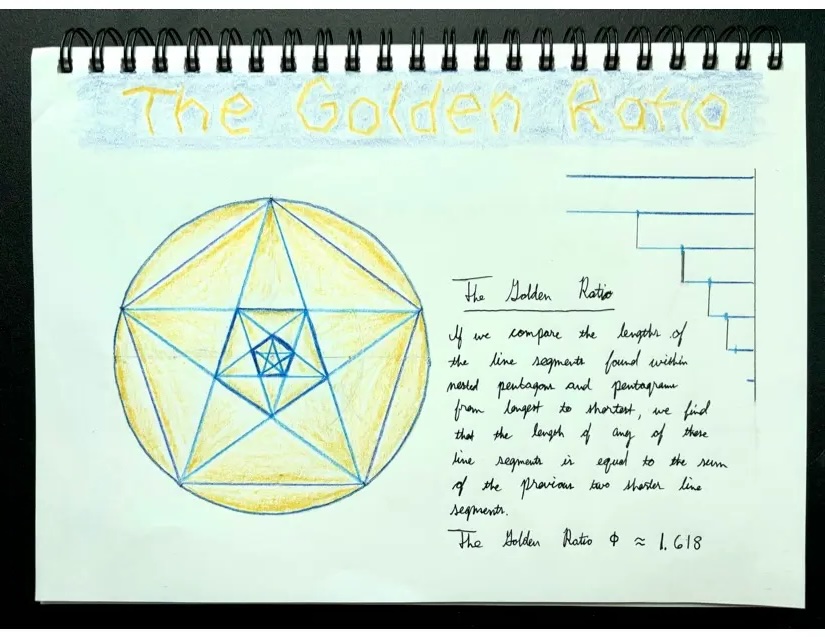
Teaching Geometry
When we consider the best method for teaching geometry, we should consider how to compose such a curriculum. Like the movements in a symphony, teaching geometry should follow a natural and beautiful logic based on the developing human being. It should unfold in an arc that parallels the blossoming capacities of the adolescent and harmonizes…
-

Middle School Science
Last week, we wrote a post where we outlined why we teach each of the school subjects. In a classical education, including the curriculum of Enkindle Academy, these topics each serve vital developmental purposes. (They don’t just serve bureaucrats’ inexperienced ideas about what students should be taught, even though such reasoning often guided mainstream education,…