
I talk to many homeschool parents who loathe teaching math. It’s a challenging, technical skill where there’s usually one right answer and little room for error. Some homeschool parents would far rather teach history or language arts. In this post, therefore, I want to discuss how to teach math in a way that enlivens both you and your child.
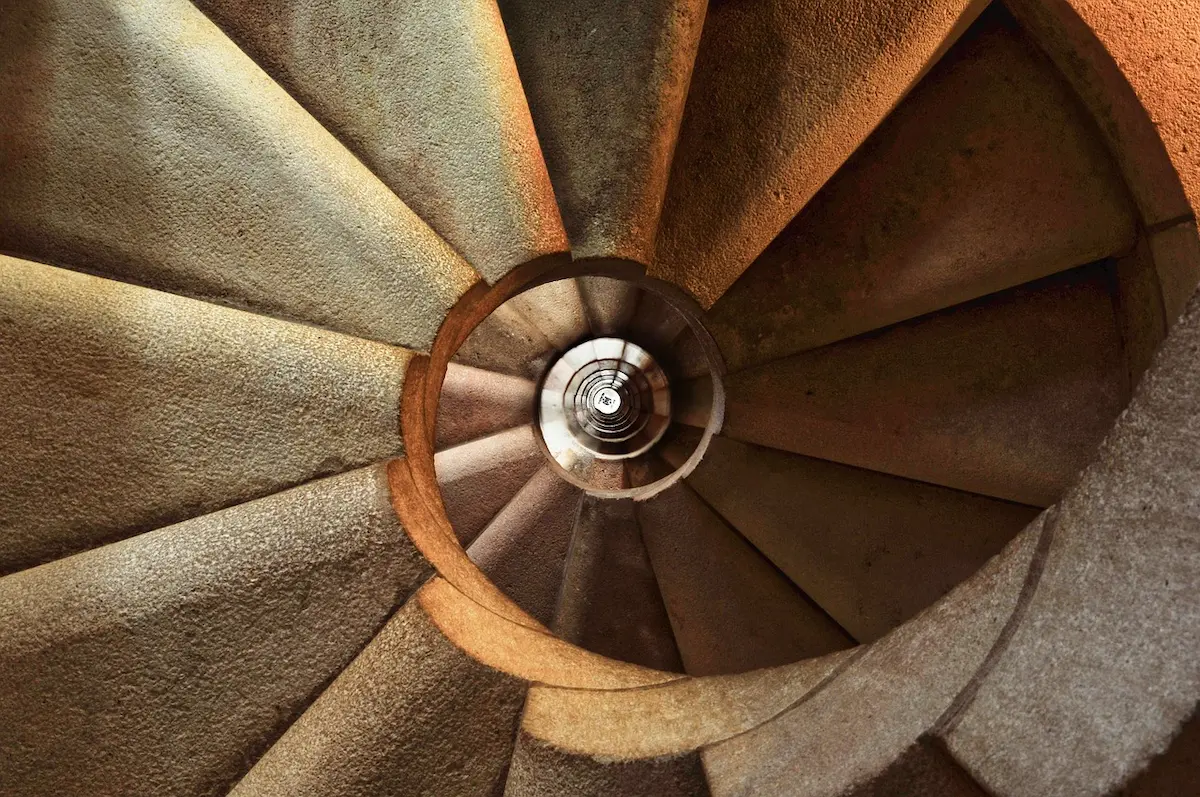
Math is a language of beauty. It describes the most sublime processes in nature, like the shape of an ocean wave, the flight patterns of flocking starlings, or the spiral blossoming of a rose. These beautiful rhythms also describe seemingly mundane phenomena like the stock market and weather patterns. Beauty can also be highly practical. It’s a shame modern schools have deadened it so much for so many students.
Math is not meant to be a lifeless, rote, purely utilitarian tooth-pulling. Rather, math describes the very fabric of reality, and we achieve success through that knowledge. As Schiller suggests, human beings – especially children – learn the most through play and enthusiasm. Our life force flows directly from our heart; what inspires us energizes and motivates us to do the work to learn whatever the thing is that inspires us. We also tend to remember that which makes a strong feeling impression on us. That’s because the limbic system (feeling center of the brain) is located right next to the hippocampus (memory center). When considering how to teach math, therefore, let us bear these things in mind. To that end, here are some suggestions.
How To Teach Math: Number Sense
My father’s cousin Yusuf tells an endearing story. He asks my father one day, “Do you know what times table I know the best?” My father answers, “No, which one?” Yusuf replies, “My 8s. Do you know why?” Puzzled, my father replies, “No, why?” Yusuf answers, “Because when I was 9, you locked me in a closet and wouldn’t let me out until I had memorized it!” Now, I don’t necessarily recommend that endearingly dedicated, and rather draconian, Old World approach, but memorizing times tables is very important to developing number sense.
What we mean by “number sense” is just as it sounds – a feeling for numbers. This is not just an intellectual thing. Starting in about first grade, students should be learning how to do addition, subtraction, multiplication, and division and then memorizing their math facts like a language. That way, by middle school, they know that 7 x 8 = 56, for example without skipping a beat, and this foundation forms the basis from which they will learn all the higher processes of middle school math.
The question is, how do we develop this number sense in an enlivening, inspiring way? The first answer is “movement.” They shouldn’t just recite the times tables, they should do it while moving because number sense comes from the legs and the fact that we move about the world with them! Teach the times tables by setting them to songs or rhythmic beats, for example. That way, you artistically enliven a rote process. You should also be playing all sorts of games with it. I used to put up a grid of numbers on my chalkboard and give students a tennis ball wrapped in a wet sock (it was clean, don’t worry). They threw the ball at the board, and whatever number they hit I would then give them a problem with. So, develop number sense through play and rhythm-music. It’s also good to give them some written problems each day. What matters is regularity more than amount. 5-10 mins done daily is better than 60 min once a week.
Cultivating Wonder
Younger children (grades 1-4) are generally quite happy learning rote things as long as it’s done in the ways described above. They don’t need a lot of intellectual stimulation, just yet. Learning their math facts rhythmically uses the heart more than the head, and that’s why it’s indicated for these years. However, it’s also good to bring imagination to numbers by describing them as beings because that’s what they actually are. Numbers are cosmic realities, not just accumulations of worldly objects like apples, or whatever. The number one, for example, describes the primordial unity of all things. It refers to the reality of all creation before any differentiation appeared. I highly recommend Schneider’s book A Beginner’s Guide to Constructing the Universe to help you weave stories around numbers for your younger ones. You can continue using this book as they mature and their concepts about the world grow.
In fifth grade, students become ready for more. Math takes on greater beauty through exploring Freehand Geometry and Number Mysteries. Having been introduced to the beings of numbers, students will now further understand through artistic form they create themselves. As well, they get to recapitulate some of the great math discoveries through number research, such as Carl Gauss’s grade school discovery of how to add up all the numbers from 1-100 in seconds.
This wonder-seeking continues through Geometric Drawing in 6th grade where precision tools (compass and straight edge) replace the freehand method of 5th grade. Don’t make that transition too soon. A 5th grader’s body is softer and less toned than that of a 6th grader. This difference matters. Geometry advances with the study of the Golden Ratio in 7th grade which joins nicely with the Renaissance History block that year. Students get to enter the thinking of masters like Fibonacci, Leonardo da Vinci, and Raphael. Then, in 8th grade they get to rediscover, through their own thinking and handwork, what Plato elaborated in his treatise on the five 3-D Platonic solids. These and other blocks give math its “juice,” making it all worth the learning.
Practical Math
No grades curriculum would be complete without some practical math. After all, it’s empowering to be able to do something with what we learn. This begins with 3rd grade Imperial Measurement, continues in 4th grade Fractions, and then moves into 5th grade Metric Measurement. These topics come to life not merely through written exercises – although, those are also important for practice – but through building structures, cooking, and training for the Pentathlon, among other applications. Students can practice their long jump and then measure their distances just like they do in the Olympics – using the metric system. Then, they can calculate their averages and so forth.
In 6th grade, practical math advances into Business Math, one of the most important blocks in the entire curriculum. When did my generation ever learn about business in public school? Very few of us did. It would seem it was removed from the curriculum at some point, perhaps after the Baby Boomers learned more than the powers that be wanted them to know. I’m only speculating, but business math still isn’t in most public school math curricula. However, we never removed it at Enkindle Academy. No way; Business Math is that important. The more the next generation understands how business works, why it matters so much, and how to recreate the economic sphere sustainably and in the spirit of brotherhood, the quicker we as a species will complete our political democracy with economic democracy. This matters tremendously, both for your students and the future of earth society.
Finally, the practical math curriculum further develops in 7th and 8th grade Algebra, as well as Mensuration blocks. These form the basis of the scientific, architectural, and engineering math they will need in high school and beyond.
What’s Your Goal in How to Teach Math?
When considering how to teach math, we have to start with the end in mind. Your child need not become a mat, genius. They can still struggle after years of education and still be considered successful. The reason is because the results matter less than the effort along the way. Success is less about ability and more about willingness to meet challenge. (This hearkens back to Carol Dweck’s concept of “Growth Mindset“, which any parent or teacher of children would benefit from familiarizing themselves with.)
What matters is less that your child becomes “good” at math and more that they’ve built some key capacities. The first is the will to pursue truth to the end. The nice thing about math is that most problems have only one right answer, providing quick and clear feedback. If your child is willing to correct their mistakes, that is better than being a math genius who never has to. Another capacity is the ability to recognize patterns in nature and life. This will serve their creativity, for the world is one, big system of interconnections. If they have discovered this through math, think of how it can apply to their relationships with other human beings and the natural world. True creativity is that which intuits the wholeness of the world within an experience of division, and finds the paths back into communion with it.
Conclusion and Further Direction
I have striven to give some basic indications here on how to teach math. A more detailed description of how to teach all I have described is way beyond the scope of this short post. However, a number of parents have recently asked us about offering parent education. This could take the form of live parent training groups, individual mentoring, short blocks on how to teach various subjects like math, history, language arts, etc. It could also take the form of families submitting student work for feedback on how their student is doing. We are open to whatever other suggestions you have. If this interests you as a homeschool parent, please Contact Us, and let us know your wishes. We are actively forming possibilities at present. Thank you!
How We Can Help
Enkindle Academy offers prerecorded and live lessons for students in grades 5-9. We teach all academic subjects plus fine arts, creative writing and language arts, and empowerment groups for teens.
Leave a Reply
You must be logged in to post a comment.